
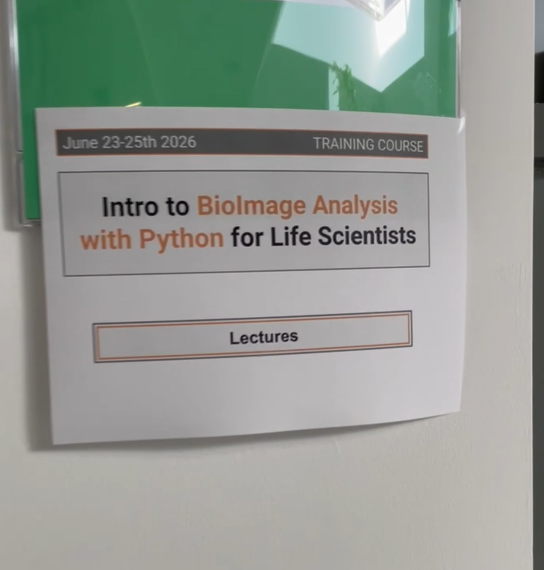
From 23 to 25 June 2026, Czech-BioImaging, through its CUNI IMCF BIOCEV facility, welcomed 11 participants to the Prague edition of the Intro to BioImage Analysis with Python course. Together with several staff members from Czech-BioImaging Core Facilities, they formed part of a total of 55 participants registered across all four host sites. The three-day training organized by the Euro-BioImaging ERIC formed part of the EVOLVE project and provided life scientists with practical experience in modern bioimage analysis using Python and Jupyter notebooks.
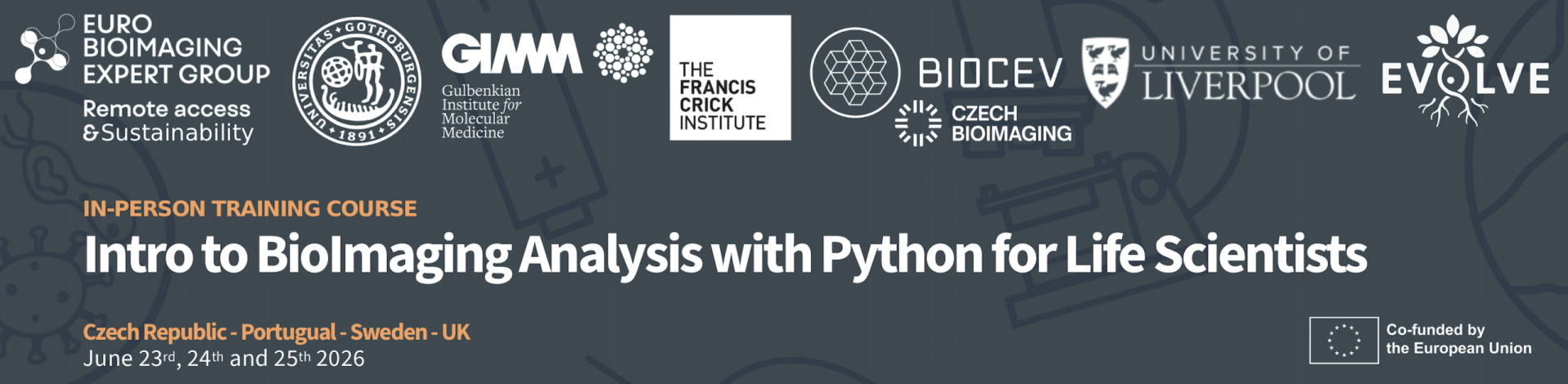
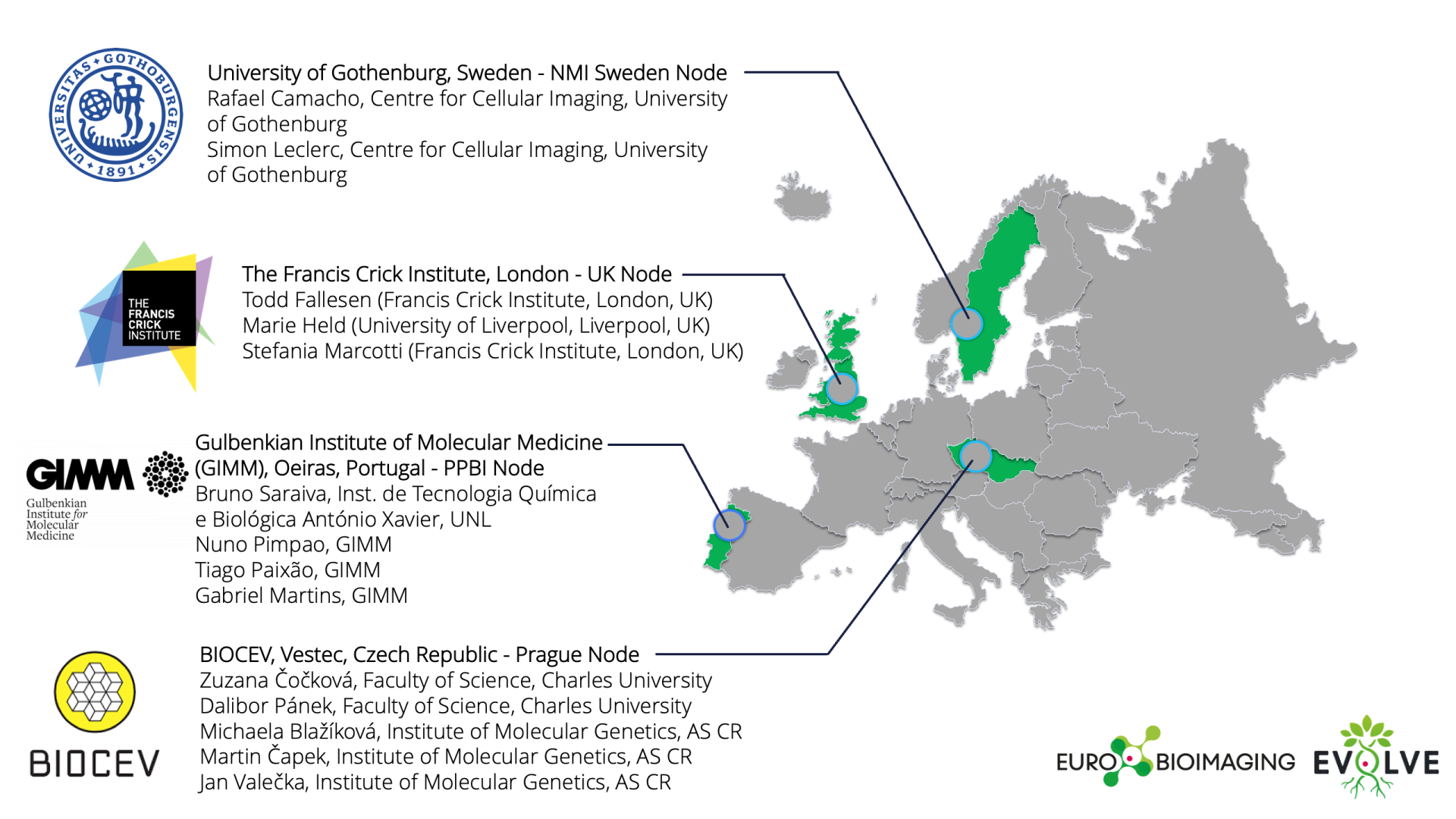
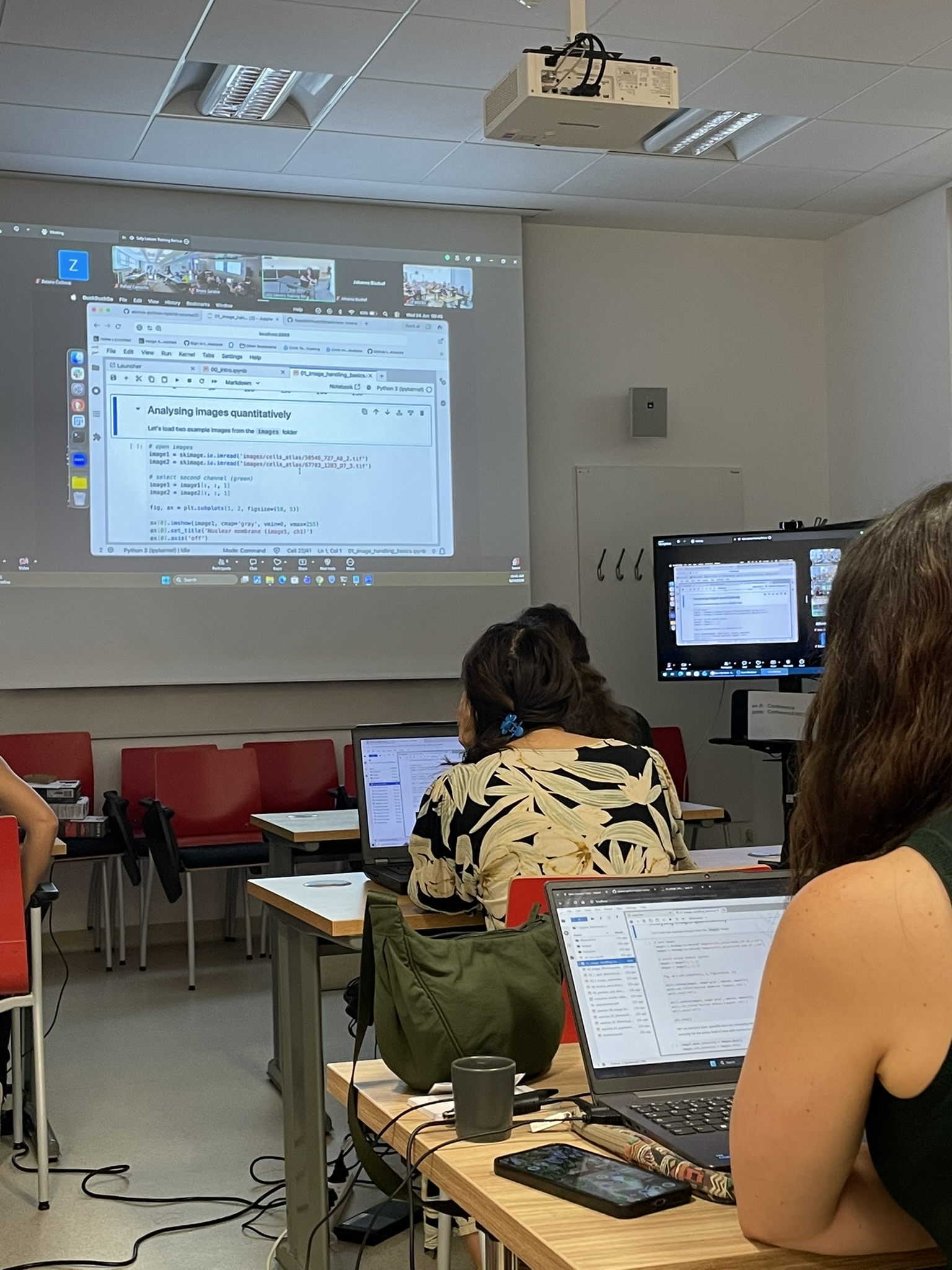
The course was organised as a distributed hybrid event across four Euro-BioImaging Nodes, allowing participants to attend in person at their local site while joining a shared international programme of lectures and hands-on sessions. Alongside the Prague Node hosted by the IMCF BIOCEV facility, the training took place simultaneously at the University of Gothenburg (NMI Sweden Node), the Gulbenkian Institute for Molecular Medicine (PPBI Node, Portugal) and The Francis Crick Institute (UK Node). This collaborative format combined local support from trainers with opportunities to learn and interact with participants and experts across Europe.
The programme introduced participants to reproducible bioimage analysis workflows in Python. During practical sessions, they worked with Jupyter notebooks to learn image processing techniques, segmentation, feature extraction and workflow automation. The course also explored recent developments in AI-based image analysis, including neural networks, deep learning and the use of pre-trained models from the BioImage Model Zoo for microscopy data analysis.
A valuable contribution to the Prague edition came from Zuzana Čočková, data analyst at the CUNI IMCF BIOCEV facility, who joined the programme as a lecturer on the final day. During her half-day session, she introduced participants to accessible, ready-to-use deep learning tools for bioimage analysis, showing that powerful AI methods are within reach for scientists even without extensive technical experience. In the hands-on part, participants segmented cells and organelles in bioimages of diverse modalities and sample types using Cellpose, empanada-napari, and pre-trained community models available through the BioImage Model Zoo. The practical sessions were supported throughout the course by staff members from the CUNI IMCF BIOCEV and IMG LM Core Facilities, who provided guidance and assisted with individual questions and troubleshooting.
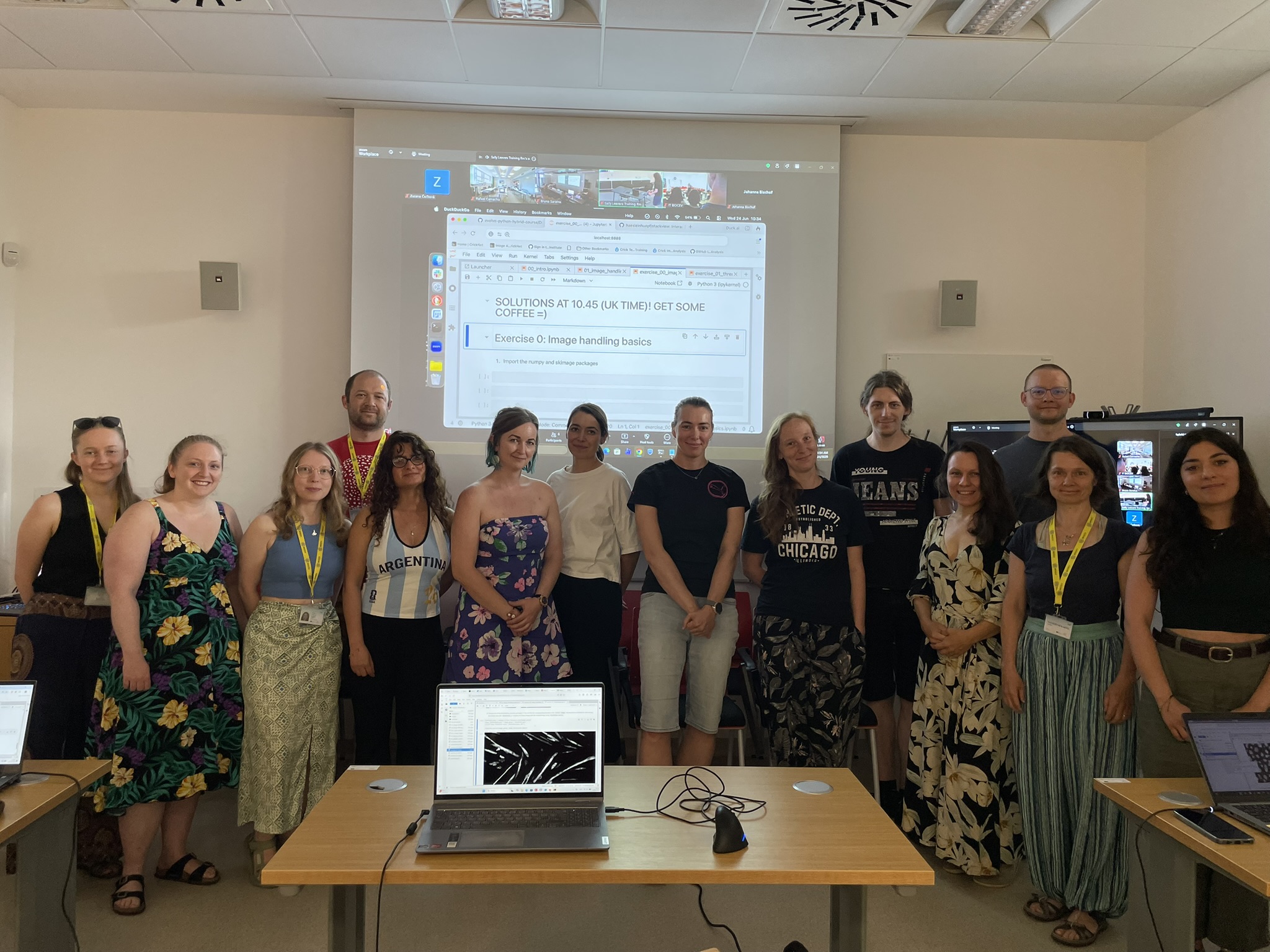
Reflecting on both the importance of Python in modern life sciences and the enthusiastic response from participants, Zuzana said: “In my humble opinion, Python skills are becoming really important for life scientists. Even getting the basics down means you can analyse your data reproducibly, and it gives you flexibility you just don’t get with closed software. And since most modern AI tools are written in Python, once you’re comfortable in it you can plug these cool methods straight into your workflows. Judging from the number of participants who attended the course, the interest is huge — and I’ve already had people asking when the next one is going to be!” The strong interest shown by participants highlighted the growing demand for practical training in reproducible bioimage analysis and modern computational methods.
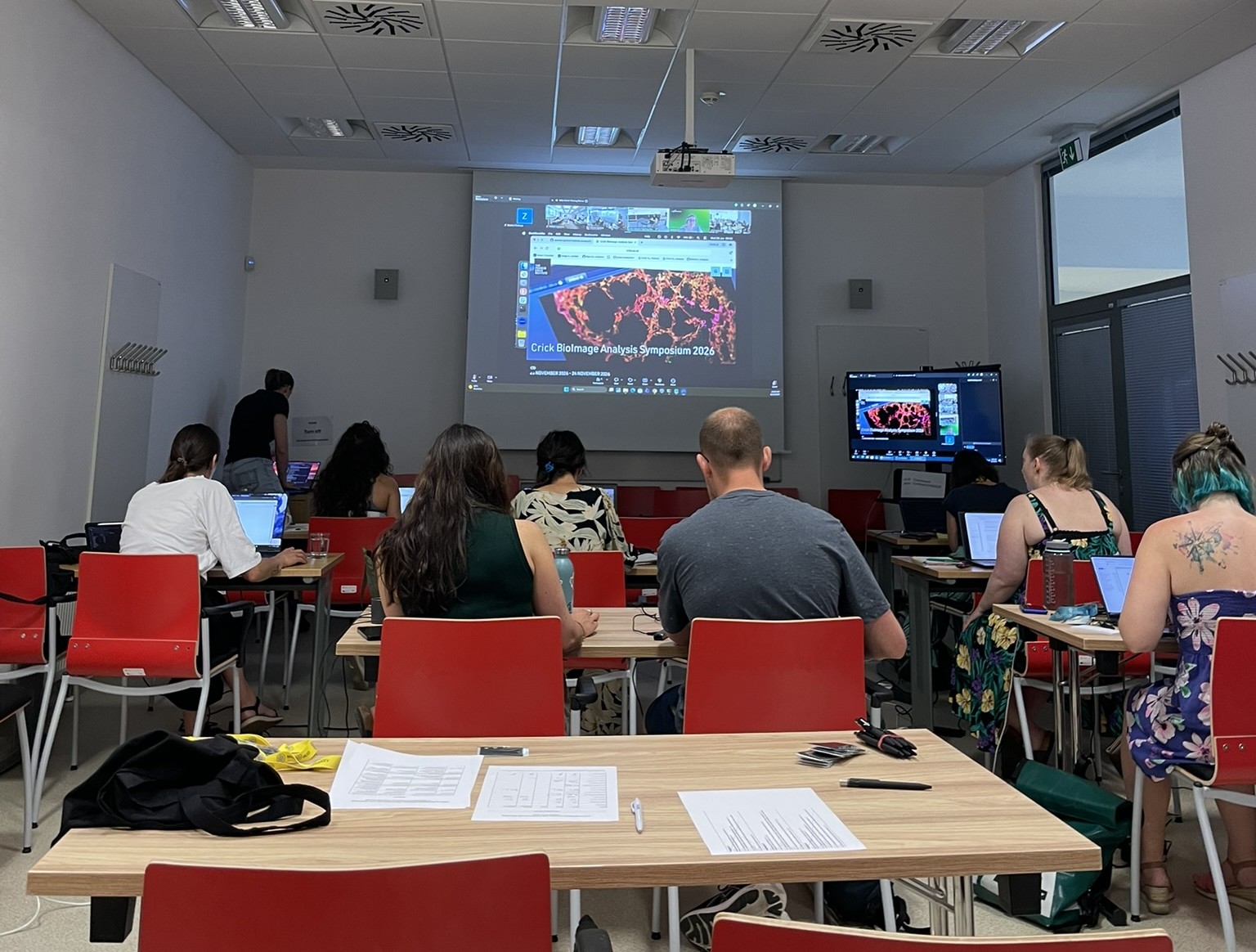
Beyond developing technical skills, the distributed format encouraged the exchange of knowledge between researchers from different institutions and countries, illustrating the value of coordinated training within the Euro-BioImaging community. By hosting the Prague edition through its CUNI IMCF BIOCEV facility, Czech-BioImaging contributed to strengthening bioimage analysis expertise and promoting reproducible image analysis practices within the life sciences.
We thank all participants, trainers and partner Nodes for making the course a success!